Why Rifling Matters (and why optics love it)
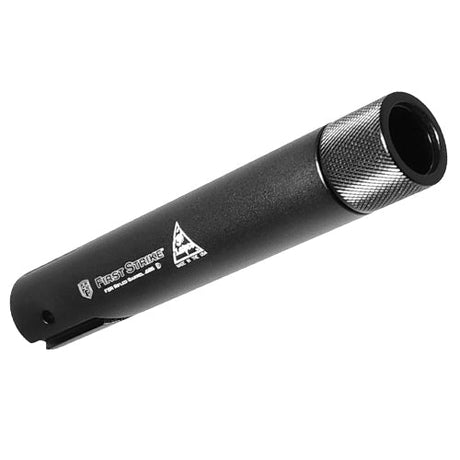
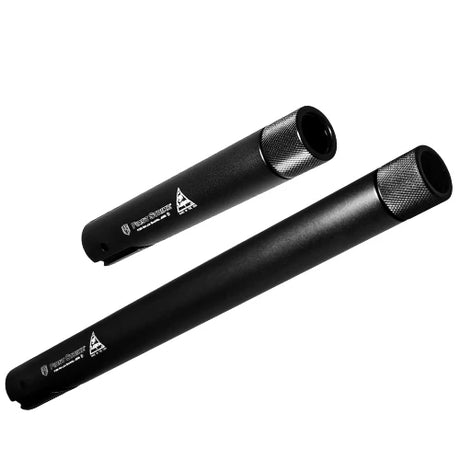
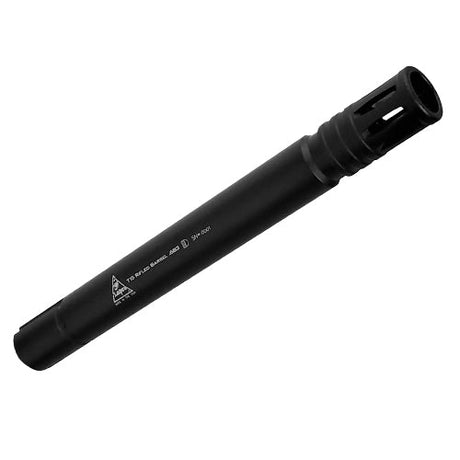
Rifling is the set of grooves inside a barrel that guides the projectile’s travel. In paintball—especially magfed—rifling primarily benefits First Strike Rounds (FSR) and certain round-ball situations by:
- Stabilizing flight for tighter groups.
- Flattening trajectory so your dope lines up with your reticle.
- Optimizing zoom optics (Supremacy, LPVOs) because the point-of-aim and point-of-impact remain consistent across distances.
TL;DR: If you run magnification or push range, rifling is the difference between “close” and “dialed.”
Rifling Types You’ll See in Paintball
Spline-Based Rifling (FSR-centric)
- What it is: Long raised splines that index between the fins of an FSR.
- Why it works: Splines engage the fins without crushing the shell, producing higher, more consistent spin and excellent long-range stability.
- Best for: Dedicated FSR users who want the flattest trajectory and maximum synergy with zoom optics.
Friction-Based (Helical/Spiral) Rifling
- What it is: Angled grooves that induce spin through surface contact with the round.
- Pros: Works for FSR and can add modest benefit to round ball in some conditions.
- Watch-outs: More contact = more drag; poor matches can induce corkscrew at long range.
Straight Rifling
- What it is: Parallel grooves that reduce boundary-layer drag and help manage airflow rather than force a full spin.
- Use case: Round ball consistency in certain paints/conditions; can reduce yaw without over-spinning fragile paint.
The Shortlist: Popular Rifled Barrels & Systems
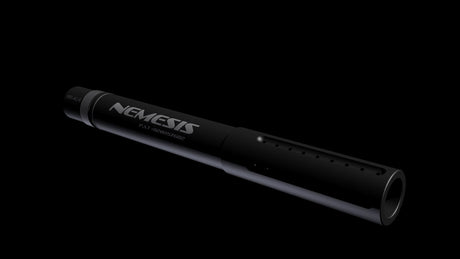
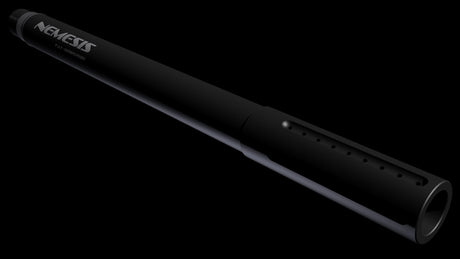
Carmatech Nemesis (Spline-Based)
- Purpose-built for FSR. Splines grip between fins, creating faster, cleaner spin and a flatter, optic-friendly trajectory.
- Great for marksman builds and anyone ranging targets with mils/MOA.
Hammerhead Barrels (Reverse-spiral family)
- “Rides on lands, channels air” approach to limit harsh contact while generating stabilizing spin.
- Models like Bang Stikxx and OneShot suit mixed play and tuners who shoot both FSR and round ball.
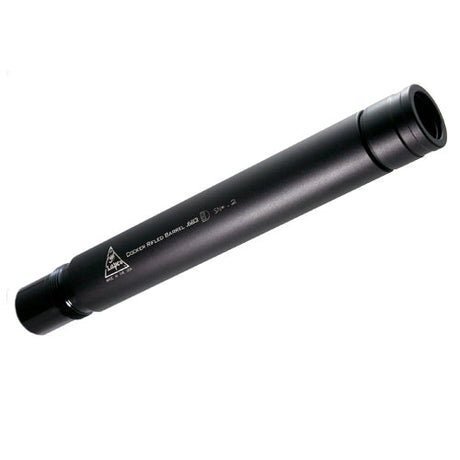
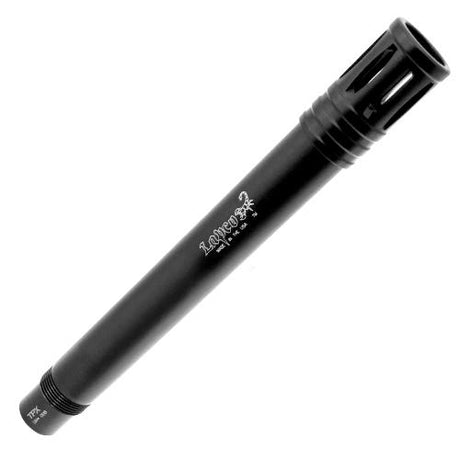
LAPCO (Precision & Options)
- Known for clean machining and consistency.
- Offers rifled options and supports modular systems; trusted choice for durable, repeatable results.
Planet Eclipse S63 with PWR Inserts (Rifled + Smooth)
- Modular: swap rifled or smooth PWR inserts to match ammo and conditions.
- LAPCO-made rifled inserts for FSR accuracy; smooth inserts for round ball days.
- Perfect for players who switch between game types.
N.I.P.S. Kit (Insert-Driven Tuning)
- Insert system for precise bore matching across paints and temps.
- Complements rifled setups by ensuring you’re not fighting a bad paint-to-bore relationship.
Bore Sizing Principles (applies to rifled & smooth systems)
From practical field use and insert-system guidance:
- Too Tight (compressed): Risks breaks, velocity and efficiency loss.
- Correct Fit (light contact at widest point): Best accuracy, efficiency, and sound.
- Slightly Loose: Useful in hot/humid or extremely brittle paint to avoid breaks.
- Too Loose: Less accuracy and efficiency; keep over-bore close, don’t go sloppy.
If you’re new to inserts, start with a light-contact fit, then bracket one size looser for hot days.
Barrel Length & Marker Notes (quick hits)
- Most magfed markers are happiest around 12–16 in. for balance of stability and air efficiency.
- Markers without practical dwell control (e.g., EMF100) generally shouldn’t exceed 16 in. or you can lose efficiency.
- Longer barrels can be viable on systems engineered for it (e.g., Carmatech SAR platforms), but tune accordingly.
Deep-dive on matching length to setup: See Choosing the Right Paintball Barrel.
Build Recommendations by Use Case
1) Dedicated FSR + Zoom Optic (DMR/Recon role)
- Barrel: Carmatech Nemesis (spline-based rifling)
- Why: Highest spin efficiency for flatter dope, best optic alignment at distance.
2) Mixed Ammo (FSR + round ball in the same day)
- Barrel: Planet Eclipse S63 + rifled PWR insert (FSR) and smooth insert (round ball)
- Why: True versatility with minimal compromises.
3) Round Ball Focus with Some Stability Help
- Barrel: Quality smoothbore or straight-rifled option, tuned via N.I.P.S. or insert kit.
- Why: Airflow management and controlled friction without over-spinning fragile paint.
4) Tuners Who Like a Hybrid Feel
- Barrel: Hammerhead series
- Why: Reverse-spiral concept stabilizes while limiting harsh friction; good middle ground.
Internal Resources & Next Steps
- Compare rifling vs. smooth and length tradeoffs in our EMF100 Barrel Selection Guide.
- System-level upgrades and components: Parts & Upgrades and Planet Eclipse Collection.
- Strategy for dialing your field role (optic + barrel pairing): Ambush / Sniper Guide and Scout / Marksman Guide.
- Broader tuning playbook: Magfed Paintball Optimization.
FAQs
Do rifled barrels help without FSR?
They can—especially straight rifling for airflow/drag management—but the biggest gains come with FSR.
Is spline-based rifling only for FSR?
Yes, it’s designed to engage fins. Use smooth or straight-rifled options for round ball days.
Will rifling make my gun quieter?
Often a little, but porting has a larger impact on report. Rifling’s primary benefit is stability/trajectory.
What about cleaning and maintenance?
Treat rifled bores like any barrel—soft swabs, no harsh abrasives, and keep inserts clean. Fins don’t like debris.
CTA
Ready to tighten groups and make your scope mean business? Explore barrels, inserts, and tuning parts here: